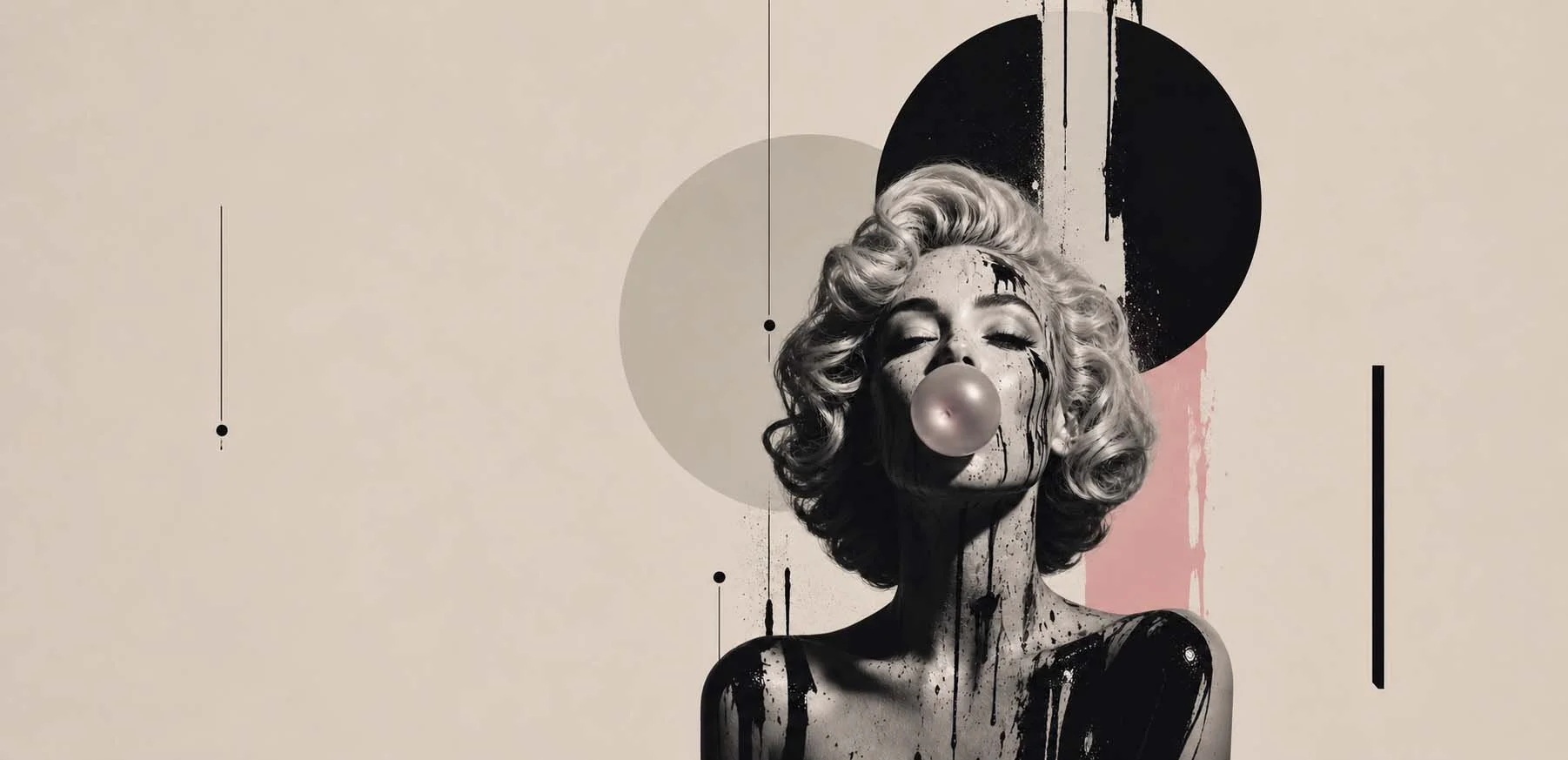
Giuseppe Franco Salon: From Salon Floor to Digital Experience
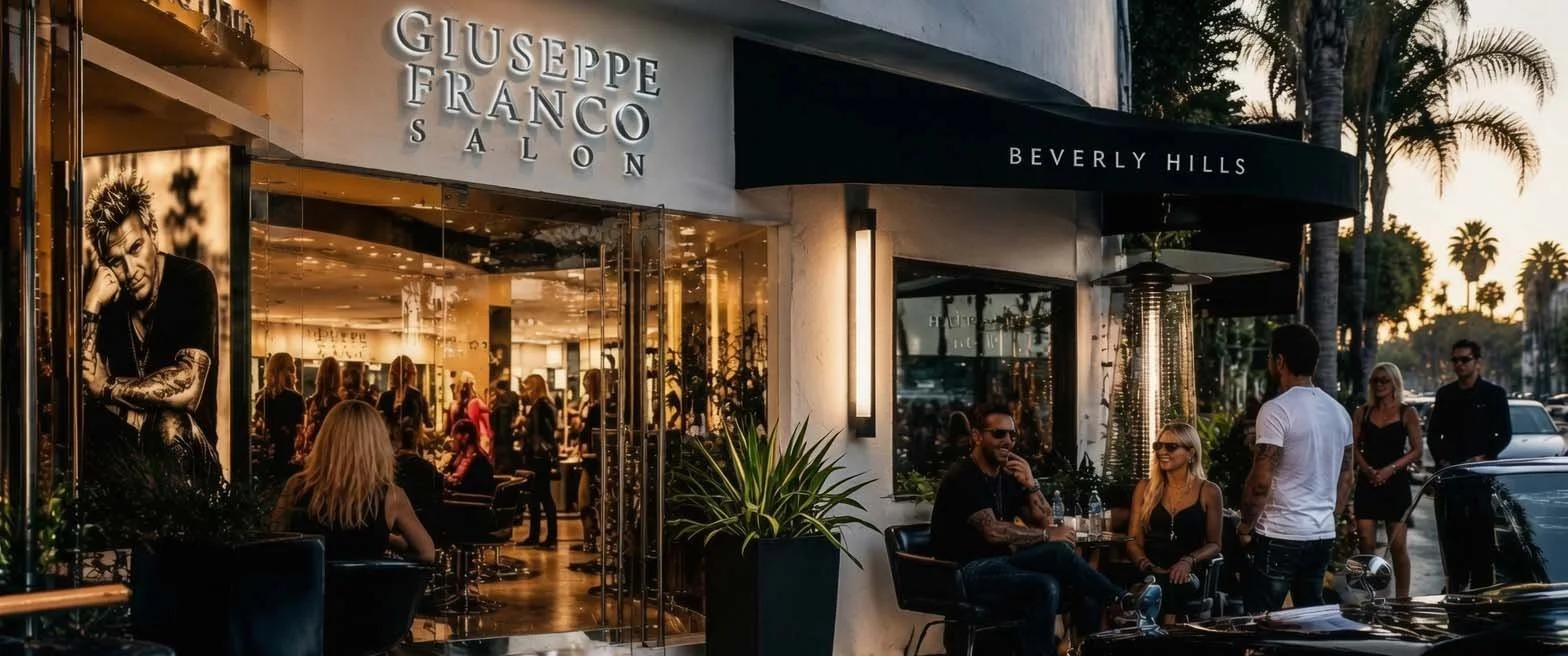
I had the advantage of already knowing the energy of the Giuseppe Franco Salon brand before it became a client project.
Giuseppe Franco Salon in Beverly Hills functioned as a social hub shaped by the people inside it.
I had been a client for years before becoming their web designer and consultant, which gave me a perspective you don’t usually get in client work. You don’t just observe the brand. You experience how it operates.
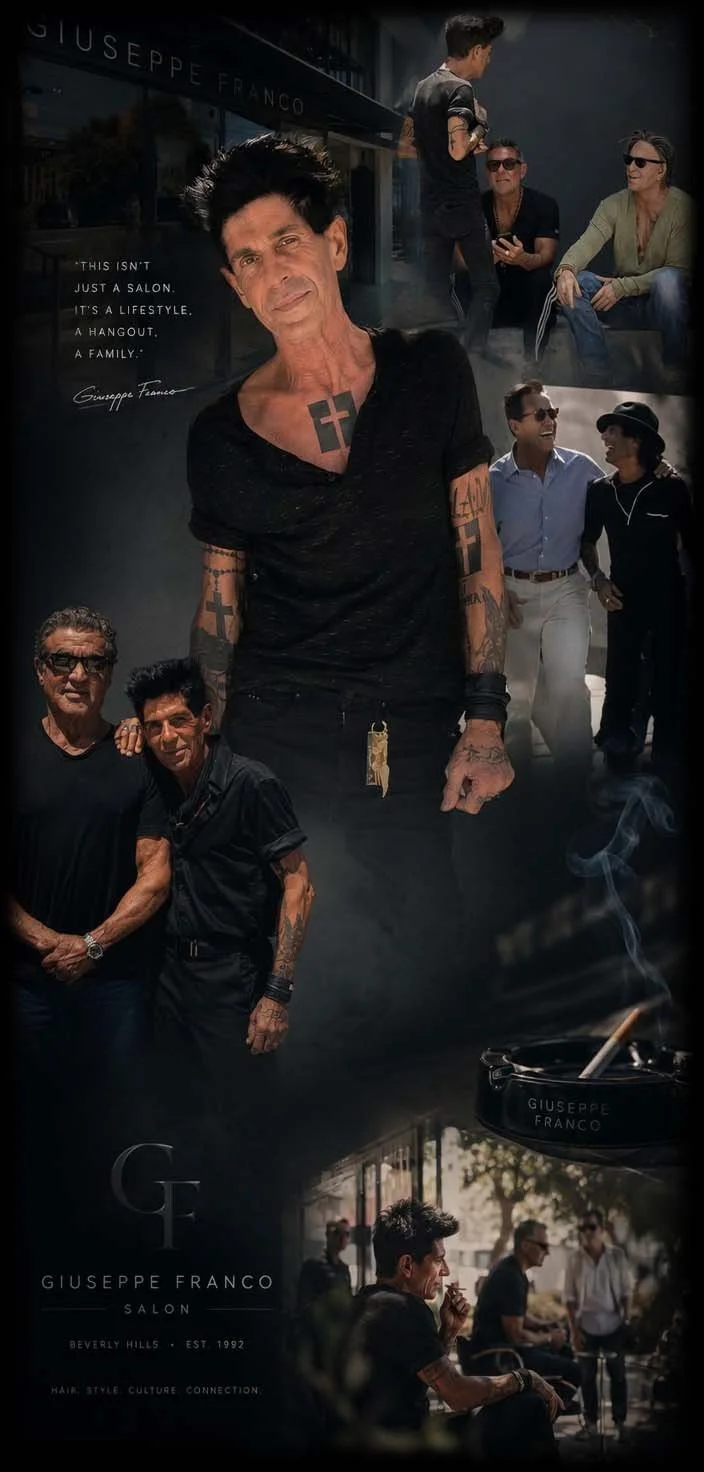
Giuseppe himself was at the center of it. Spiked hair, tattoos, and a presence that felt more rock star than salon owner. When he wasn’t cutting hair, he was greeting guests, moving through the space, setting the tone with a kind of effortless energy.
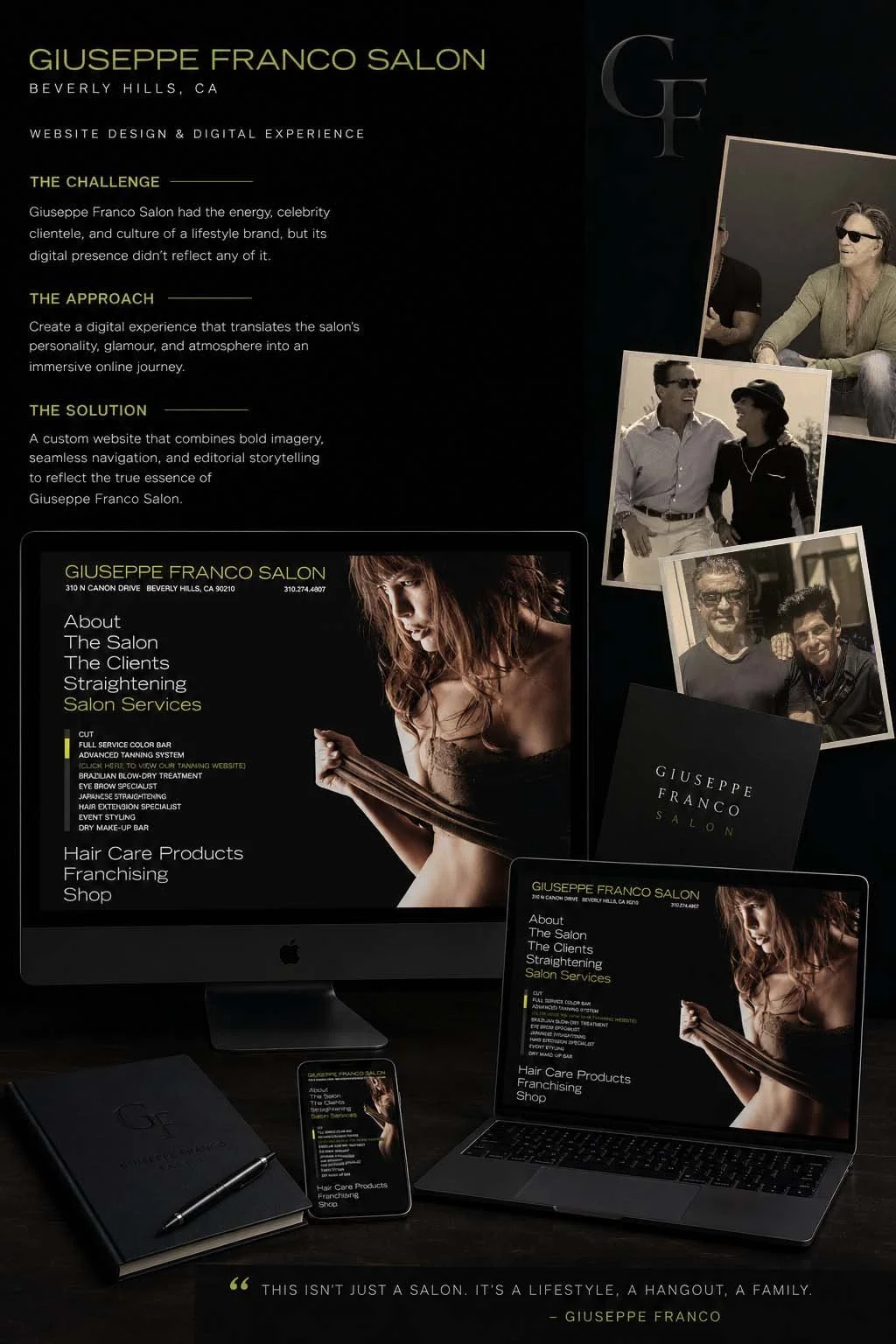
Celebrities like Sylvester Stallone, Mickey Rourke, and Arnold Schwarzenegger would often come by simply to spend time with Giuseppe.
A lot of that energy extended into the small outdoor area beside the salon. People would wait there, hang out, and talk while things were moving inside.
Giuseppe would often try to finish his cigarette quickly before getting pulled back into something else. Even in those short breaks, that outdoor space had its own rhythm.
Conversations rarely ended when the appointment did.
Online, none of that existed.
The digital presence felt disconnected from what the place actually was.
That gap became the starting point.
The Creative Context
At the time, I was already working across entertainment, fashion, and lifestyle brands. I had completed four high-end websites for the fashion brand L*Space, working directly with founder Monica Wise. Around the same time, United Licensing Group owner Jimmy Esebag brought me in to develop interactive lookbooks for Pamela Anderson’s clothing line.
The common thread across that work wasn’t industry. It was expression. Everything was about translating personality, culture, and identity into experience.
That made the contrast with Giuseppe Franco Salon obvious immediately.
This wasn’t a business that needed a website refresh. It was a lifestyle brand operating in the same world as fashion, celebrity culture, and entertainment, but without a digital expression that matched it.
The opportunity wasn’t a redesign. It was translation.
Building the Vision
Giuseppe's relationship with technology could best be described as optional, which ended up shaping the entire creative process.
He wasn’t active on social media, rarely used email directly, and his assistant would often print messages so he could read them physically.
But creatively, that simplicity worked in our favor.
He wasn't trying to micromanage the process. He trusted the direction and gave me the freedom to create the experience.
I directed a custom editorial photoshoot inside the salon to build the visual foundation of the site. The goal wasn't to show people what the salon looked like. It was to give them a sense of what it felt like to be there.
A lot of the work also happened outside, in the small area beside the salon.
By that point, the space had become part of the project itself. Giuseppe would step out for a quick cigarette, people would drift in and out of conversations, and I would use those moments to show him new ideas as they developed.
There were no formal presentations or scheduled reviews. The feedback happened naturally, in the same environment we were trying to capture online.
Outcome
The finished website translated the energy, glamour, and personality of Giuseppe Franco Salon into a digital experience that felt alive rather than static.
At the time, most salon websites were online brochures. The site used motion, imagery, and narrative driven design. More importantly, it felt true to what the salon actually was.
But the project didn’t exist only online.
A lot of what shaped it came from being there, in and around the salon, while everything was unfolding.
Giuseppe enjoyed having me there. The project moved quickly and was built in real time rather than planned in advance.
After launch, Giuseppe encouraged me to keep working from the outside area and stay connected within his network. Through that environment, I met entrepreneur Daniel Marshall, who later brought me into the 30th anniversary Scarface project, a limited edition luxury cigar and collector’s humidor collaboration.
Looking back, that space outside the salon felt less like a workplace and more like part of everything that was happening around it.
Looking Back
Giuseppe didn’t overthink the work. He responded to it and trusted the direction as it developed.
At the time, I didn’t fully understand how rare that kind of trust was.
The relationship wasn’t formal or structured. It was more fluid and more human.
Build a Website That Feels Like Your Brand
See how strategic design and storytelling can transform your physical space into a digital experience that connects, engages, and leaves a lasting impression.