L*Space Swimwear
Fashion Website • Multi-Year Redesign
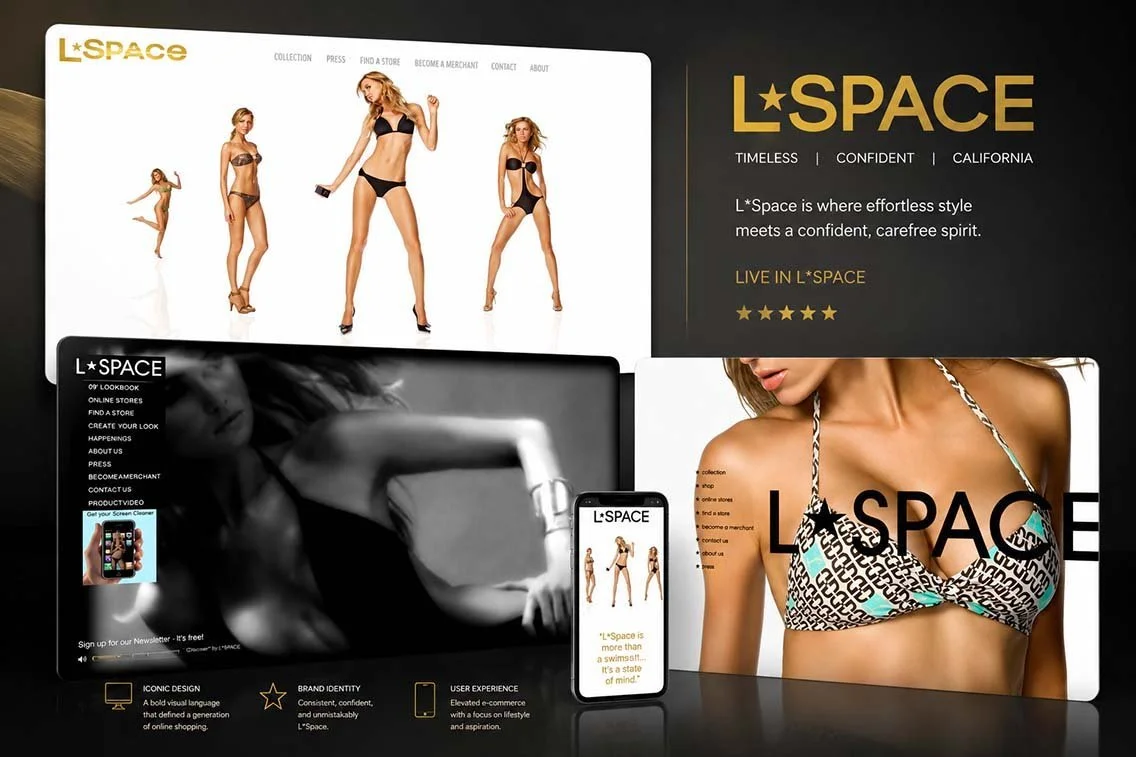
L*Space is a premium women’s swimwear and lifestyle brand founded by Monica Wise. The brand is known for bold prints, high-quality fabrics, and a confident California-inspired aesthetic that helped it grow into a globally recognized name in contemporary swimwear.
The Brand and the Timing
My work with L*Space did not happen in a single moment. It happened across a period where both the brand and the web itself were changing quickly.
Over multiple years, I worked directly with Monica Wise as the primary web designer for the brand. During that time, I created and launched four completely new website builds, each aligned with a new swimwear collection and a new stage of where web technology had evolved.
Each new collection did not just require updated imagery. It required a new digital interpretation of the brand that reflected both the creative direction of the line and what was now possible online at that moment.
The website was never static. It was rebuilt and rethought as the brand grew, and as the web itself changed.
The Shift From Static Websites to Living Experiences When we first started, fashion websites were still structured like digital catalogs.
Static images. Simple grids. Minimal motion.
Over time, new capabilities began to change what was possible.
Full-screen video backgrounds started to become viable in browsers. Mobile browsing, driven by the rise of smartphones, shifted user behavior toward touch-first experiences. At the same time, image quality and campaign photography improved significantly across the fashion industry.
Each of these shifts changed what a modern fashion website needed to be.
With L*Space, we did not wait for standards to settle. We adapted as they emerged.
Creative Direction Across Technology Shifts
Each new collection became an opportunity to rethink the experience.
At one point, full-screen video was still an emerging pattern in ecommerce. We introduced it into hero sections to create a more immersive and editorial feel, bringing campaign energy directly into the first interaction on the page.
As mobile usage increased, layouts had to be rebuilt around vertical storytelling, touch interaction, and faster loading behavior designed for smartphones rather than desktop-first browsing.
At the same time, the quality of L*Space’s photography evolved significantly year over year. This changed the role of design itself.
Earlier versions of the site required more structured layouts and heavier design intervention. Over time, the work shifted toward showcasing stronger creative assets in a more direct and minimal way.
The better the imagery became, the less the interface needed to compete with it.
Building for a Changing Ecosystem
As the brand expanded, so did its distribution and customer behavior.
We introduced and refined features such as:
global store locator and “where to buy” systems
ecommerce integration for expanding seasonal collections
mobile-first browsing experiences as smartphones became the primary access point
evolving homepage structures based on seasonal campaign direction
experimental layouts aligned with new capabilities in web technology at the time
At the same time, user behavior around fashion brands shifted.
Early on, the website was the destination.
Later, it became part of a wider ecosystem that included social media, retail partners, and mobile discovery. The website needed to support all of this while maintaining a clear and consistent brand identity.
The Role of the Website Over Time
What became most interesting over time was how the role of the website changed.
At first, it functioned as a product catalog.
Later, it became a campaign-driven experience.
Eventually, it became a flexible system that supported:
fast-changing seasonal identity
evolving visual storytelling formats
mobile-first user behavior
increasingly high expectations for editorial-level ecommerce design
Each redesign was not just an update. It was a response to where the web was going and what the brand needed at that exact moment.
Outcome
Across multiple years and four full website rebuilds, the L*Space digital experience evolved alongside both the brand and the broader shift in web design.
The result was a continuously modern online presence that reflected:
the evolution of fashion ecommerce
the shift to mobile-first design
the rise of immersive media-rich web experiences
the expectation that brand websites function as editorial platforms rather than static catalogs
Rather than becoming outdated between collections, the site stayed aligned with both the visual evolution of the brand and the technological capabilities of the web at each stage.
Looking Back
What makes the L*Space work interesting is not any single website.
It is the fact that it captured a transition period in web design, when fashion brands were moving from static ecommerce templates into more dynamic and immersive digital experiences.
Each version of the site reflects not just a new collection, but a different stage of what the web itself could do at the time.
And the work evolved with it